English| USD
Suggested for you
More currencies
Choose a language
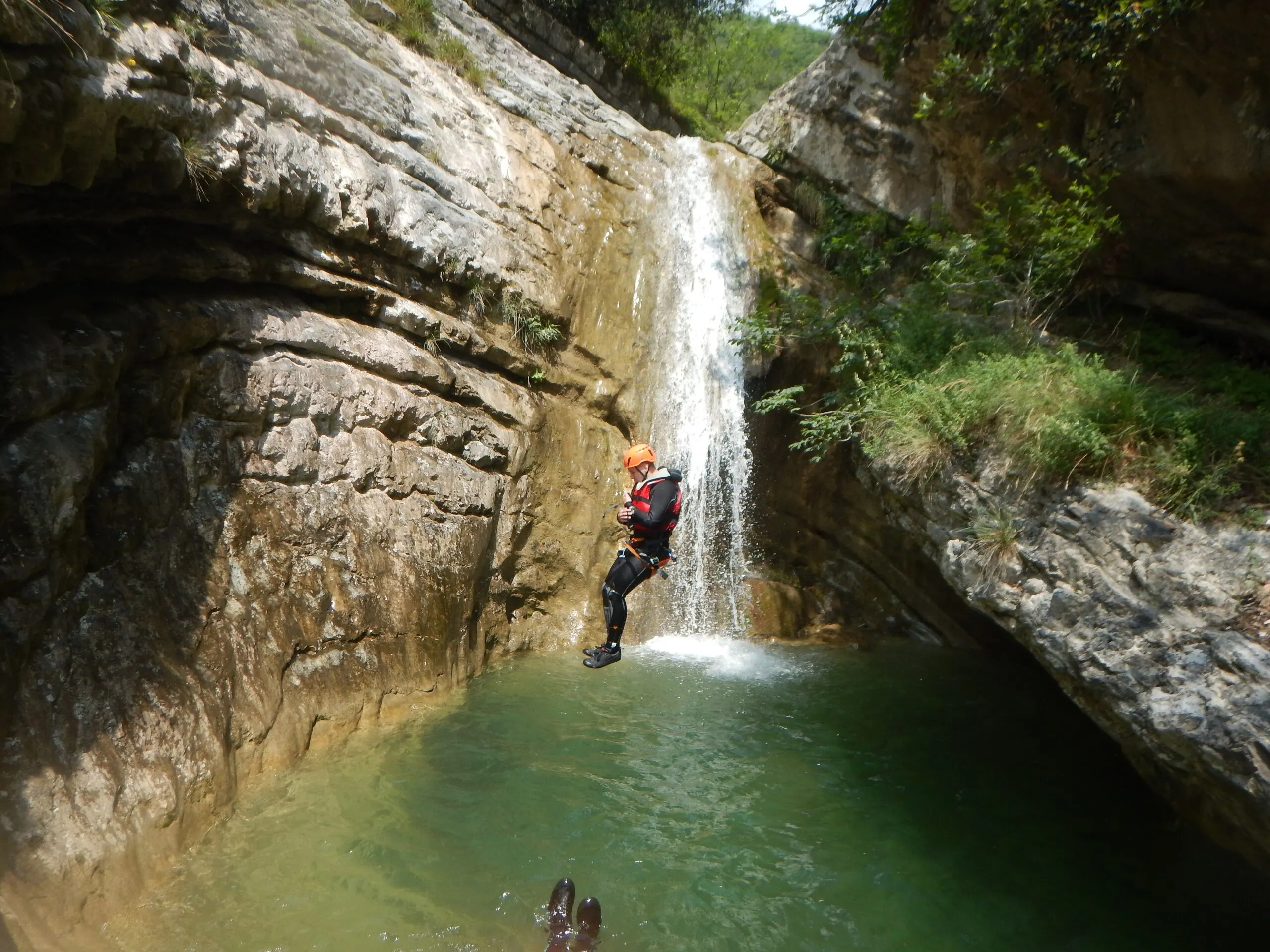
Above the lake's olive terraces, a series of tributary gorges drops hard toward the shore, and only a handful are open to guided descent. This best canyoning lake garda guide explains how the northern Trentino canyons differ from those on the Lombard side. It sets out what separates a family-grade slide route from a full technical descent.
Quick answer
The strongest canyoning around Lake Garda is concentrated in the mountain gorges north and west of the shoreline — Rio Nero and Palvico in Trentino, Vione and Toscolano on the Lombard side. Access to the nature areas is free at 0 EUR, but every descent requires a licensed guide, and daily operating hours run 09:00–18:00 across the week. Water flow, not season, decides which canyon runs.
Lake Garda's finest canyoning does not happen at the lake. It happens several hundred metres above it, in tributary gorges cut by snowmelt from the Ledro, Brenta and Baldo ranges long before that water reaches the shoreline. The vertical distance is the point. While Riva del Garda and Torbole sit in a mild, almost Mediterranean pocket, the streams feeding them stay cold through summer. Anyone shortlisting routes for the best canyoning lake garda has to weigh that gap between air and water temperature first, because it governs wetsuit thickness, group pace and how long a descent stays comfortable. The area splits into two canyoning districts. On the Trentino side, Val di Ledro and the Valle del Chiese hold Rio Nero and Palvico: high-volume watercourses with long natural slides, deep plunge pools and abseils on fixed anchors. On the Lombard shore, inside the Parco Alto Garda Bresciano, the Vione above Tignale runs narrow and technical through pale limestone, while the Torrente Toscolano behind Toscolano Maderno gives a broader, more forgiving descent. Further east, the Vajo dell'Orsa cuts into the flank of Monte Baldo. Each route is graded separately for vertical drop, water volume and commitment, and operators publish those grades rather than one ranking. That is why canyoning Lago di Garda searches rarely return a single winner. The honest answer depends on the height of the biggest jump a group is willing to make. Water flow decides more than the calendar. A gorge that runs clean in a dry August week can close after one night of storms over the Brenta Dolomites, and controlled releases in the Chiese valley shift levels within hours. Guides read those levels each morning and move groups between canyons, which is why Lake Garda canyoning tours usually confirm a difficulty band rather than a fixed canyon name. Children from around eight years old are routed to shorter, lower-commitment sections. Stronger groups take the full descents with the longer abseils and the exposed jumps. The sections that follow set out access hours, costs, arrival logistics and kit in detail, so this page keeps to the framing. Choose a difficulty band honestly, treat professional supervision as compulsory rather than optional, and expect the morning flow assessment to override any shortlist of the best canyoning lake garda drawn up weeks in advance. Nature access along these valleys is unrestricted; the descent through them is not.
“The morning flow reading, not the calendar, decides which gorge a group descends.”
The prime season for canyoning at Lake Garda spans from May to September when water temperatures are suitable for mountain stream activities. For optimal conditions, visitors should aim for the 09:00–12:00 arrival window to maximize available sunlight and manage water flow levels.
Mild with water temps 10-14°C
Early season offers stable water levels and fewer crowds.
Warm with air temps 25-30°C
Expect peak activity levels and high demand for guided tours.
Cooling air and water temperatures
Ideal conditions for those seeking quieter canyons before the season ends.
Optimal daylight
Arrival between 09:00 and 12:00 ensures the best balance of temperature and visibility.
Verdict: The most effective time to experience canyoning is between May and September, prioritizing arrival between 09:00 and 12:00 on weekdays.
The Lake Garda canyoning information center maintains consistent daily operating hours throughout the week.
Access to the natural canyons at Lake Garda requires no entry fee. Professional canyoning activities depend on guided tour bookings.
Verdict: While nature access is 0 EUR, participants typically pay market rates for professional guided tours depending on the selected operator.
Canyoning zones are located throughout the Lake Garda area in Trentino-Alto Adige and Lombardy. Most visitors access these sites via Riva del Garda or Arco using regional roads.
SS45bis or SS240 to Riva del Garda/Arco
Line 273 or 332 to Riva del Garda station
Private transfer to mountain trailheads
Plan your arrival for the 09:00–12:00 window to ensure optimal water temperature and daylight conditions for your activity. Ensure you coordinate your transport drop-off point with your pre-booked guide.
Canyoning at Lake Garda runs on booked guided slots, so work through these steps in order, from weeks out to the moment you meet your guide.
Everything you need to know about best canyoning lake garda
While independent travel is possible in some areas, guided booking is highly recommended for safety due to shifting water levels and technical terrain. Professional guides possess local knowledge of the geology and weather patterns essential for a secure trip. Booking through authorized services ensures you are properly equipped for your adventure. Expert guidance allows you to focus on the experience while professionals manage the technical safety protocols.
Canyoning Tours in Lake Garda
Read more Tickets & toursCanyoning with Kids in Lake Garda
Read more GuideCanyoning in Lake Garda: October Tips
Read more GuideHow to Get Around Lake Garda
Read more Tickets & toursFamily Canyoning in Lake Garda
Read more Tickets & toursCanyoning in Torbole
Read more